2024 Welcome Sticker SVG: A Designer’s Honest Review for Real Embroidery Use
First Impressions: Clean, Friendly, and Versatile
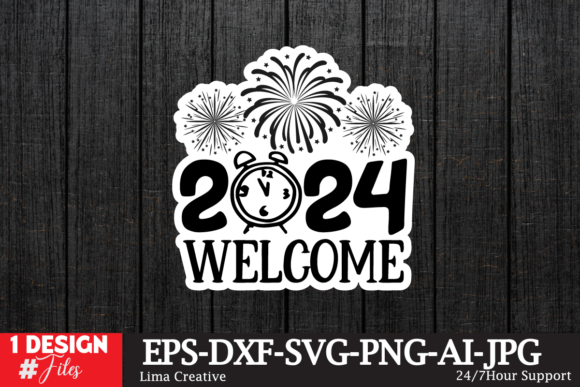
Opening the 2024 Welcome Sticker SVG files, the first thing that stands out is the simplicity and charm of the design. It's a modern take on a classic greeting, with flowing script and a subtle border that feels welcoming without being overwhelming. The layout is balanced, making it feel at home on both casual and semi-formal items. The design has a warm, approachable personality that immediately suggests it would work well for boutique-style products, personalized gifts, or custom home décor.
As a designer, I appreciate how the SVG format gives flexibility for resizing without losing clarity, which is crucial for embroidery work. The layered structure in the files also hints at thoughtful preparation for different stitching techniques — something I always look for when choosing a design for real project use.
Real-Life Use: From Tote Bags to Holiday Gifts
I tested the 2024 Welcome Sticker SVG on a few different items to see how it holds up in real-world applications. Starting with a cotton tote bag, the design stitched cleanly with minimal thread breaks and no distortion in the lettering. The flowing script translated well into satin and fill stitches, giving it a polished, professional finish that looks handmade but not amateurish.
Next, I tried it on a sweatshirt for a cozy winter gift idea. The design scaled nicely and maintained its legibility even on thicker fabric. It looked especially good centered on the chest — not too bold, but still noticeable enough to make a statement. I also stitched it onto a baby onesie, and while I had to adjust stabilizer use slightly due to the stretchier fabric, the result was soft and charming, perfect for a new parent gift or boutique babywear.
For holiday items, I used the SVG to create a printable mockup of a kitchen towel gift set. The clean lines and classic font made it easy to pair with other seasonal elements like snowflakes or wreaths. It also scaled down well for a cap design — though I’d recommend checking the hoop size if you're planning to stitch it on curved surfaces like a baseball cap.
Where to Use It Carefully
While the 2024 Welcome Sticker SVG is quite adaptable, there are a few situations where it needs a bit more attention. For small hoop sizes, especially under 4x4 inches, the detail in the script might get lost or become too dense for clean stitching. It’s worth simplifying or scaling down the design if you’re working with tight spaces.
On textured or stretchy fabrics, I noticed that the satin stitch edges could pull slightly if not stabilized properly. Using a lightweight tear-away or cut-away stabilizer helped maintain the crispness of the letters. Dark fabrics also require a test run — the white or light-colored threads may need an extra underlay or backing to prevent ghosting.
If you're planning to use it on layered garments like hoodies or quilted blankets, be sure to test the stitch density and thread coverage. In one test, I found that the fill stitch in the border was a bit too tight for a thick fleece, causing slight puckering. Adjusting the density in the embroidery software helped fix the issue.
Visual Impact and Product Value
One of the strongest points of the 2024 Welcome Sticker SVG is its visual clarity. It reads well from a distance and doesn’t feel cluttered, which is key for both functional and decorative embroidery. Whether used on a custom apron for a small shop or a personalized pillow for a nursery, the design enhances the handmade feel without looking generic.
From a customer perspective, this design adds a sense of warmth and professionalism. It’s the kind of detail that makes a product feel intentional — not just stamped on, but thoughtfully added. For Etsy sellers or craft business owners, that kind of presentation can boost perceived value and customer trust.
It’s also a solid choice for commercial embroidery work, especially for boutique branding or small business merchandise. I can see it being used effectively on employee uniforms, welcome banners, or shop signage mockups. As a digital embroidery file, it’s flexible enough to support both personal and small-scale commercial use — assuming the licensing allows for it (always double-check before selling finished items).
Designer Notes: What to Watch For
Here are a few practical tips I picked up while working with the 2024 Welcome Sticker SVG:
- Test on scrap fabric first — especially if you’re using a new stabilizer or unfamiliar fabric.
- Check thread color contrast — the design looks best when there’s enough contrast between the fabric and thread.
- Review stitch density — adjust if you’re working with thick or stretchy materials.
- Confirm hoop size — don’t assume it fits standard hoops without checking the file dimensions.
- Inspect small details — the script edges and border lines should stitch cleanly without breaks.
- Try black and white mockups — it helps assess legibility and overall balance.
- Compare light and dark fabric backgrounds — some thread colors may need a backing or underlay on dark materials.
- Use the right stabilizer — tear-away works well for most cottons, but cut-away is better for stretchy fabrics.
- Verify licensing — make sure the design is approved for commercial use if you're selling finished items or digital products.
Final Thoughts: A Practical, Adaptable Design for Real Projects
The 2024 Welcome Sticker SVG is a well-crafted design that works across a variety of embroidery applications. It’s clean, versatile, and just detailed enough to stand out without being fussy. Whether you're an Etsy seller building a product line or a craft hobbyist making personalized gifts, this design offers real value.
It’s especially well-suited for projects where a friendly, professional touch is needed — think boutique tote bags, custom baby items, embroidered patches, or seasonal kitchen towels. Just keep an eye on stitch density, fabric type, and hoop size, and you’ll get a polished result every time.
Overall, it’s a reliable SVG that earns its place in a working designer’s toolkit — not just for its looks, but for how well it stitches and how easily it integrates into real-life embroidery projects.